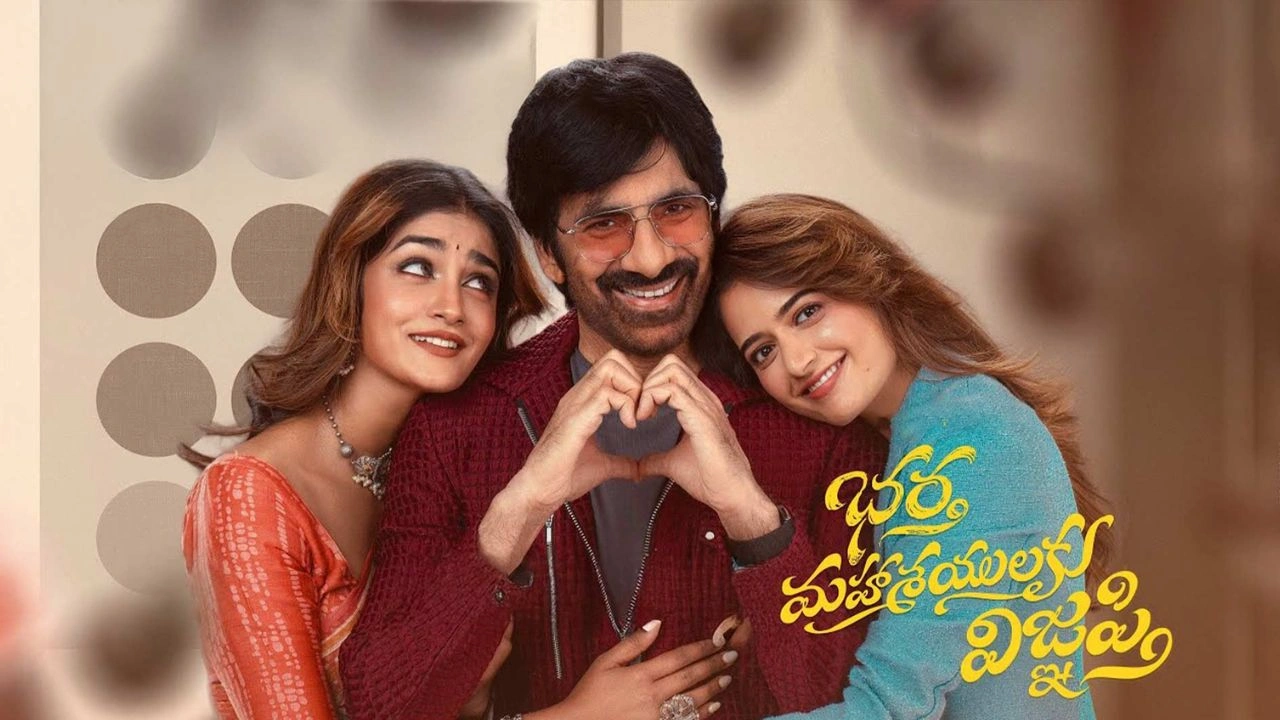
Bhartha Mahasayulaku Wignyapathi Movie: A heartfelt tale of misunderstandings, emotions, and reconciliation that travels from India to Spain and back.
Bhartha Mahasayulaku Wignyapathi (2026) arrives as a refreshing departure from loud commercial entertainers, offering audiences a family-centric emotional drama rooted in relationships, responsibility, and personal growth. Directed and written by Thirumala Kishore, the film stars Ravi Teja in a role that blends humour, maturity, and emotional sensitivity, supported by Ketika Sharma and Ashika Ranganath in pivotal roles.
Released on January 13, 2026, the film positions itself as a feel-good yet thoughtful family entertainer, exploring how ego, misunderstandings, and unresolved emotions can disrupt lives—and how empathy and dialogue can heal them.
Story Overview: From Rejection to Realisation
The story revolves around Ram, played by Ravi Teja, whose life takes an unexpected turn when a crucial proposal in his personal life gets rejected. This setback sends him on an unplanned journey to Spain, both geographically and emotionally.

In Spain, Ram meets Manasa, and what initially appears to be a light-hearted interaction slowly unfolds into a deeper emotional connection. However, this new chapter is complicated by unresolved family conflicts back home, particularly involving two women whose strained relationship lies at the heart of the story.
Rather than focusing on romance alone, the film shifts attention to family dynamics, emotional accountability, and reconciliation, making Ram’s journey one of self-awareness and responsibility.
At its core, this is a story about listening before reacting and understanding before judging.
View Also: Border 2 Movie Review: A Powerful War Epic Reigniting the Spirit of 1971
Director Thirumala Kishore’s Vision: Simplicity with Substance
Thirumala Kishore is known for crafting relatable narratives grounded in everyday emotions, and Bhartha Mahasayulaku Wignyapathi continues that tradition. His direction is subtle, favouring emotional clarity over dramatic exaggeration.
Key Directorial Strengths:
- Natural flow of emotions without forced melodrama
- Smooth transition between humour and seriousness
- Strong focus on character relationships
- Balanced pacing suitable for family audiences
Kishore allows scenes to breathe, trusting performances and dialogues to carry emotional weight. The film never rushes its message, ensuring viewers absorb its themes organically.
Ravi Teja: A Mature, Grounded Performance
Ravi Teja surprises with a restrained and mature portrayal, stepping away from his high-energy action persona. As Ram, he embodies a man navigating disappointment, confusion, and eventual growth.
Highlights of Ravi Teja’s Performance:
- Effortless blend of humour and emotional depth
- Strong screen presence without overpowering the narrative
- Convincing portrayal of vulnerability and accountability
- Excellent chemistry with both female leads
This role showcases Ravi Teja’s versatility, proving that he can anchor emotionally driven stories just as effectively as action-packed ones.
Ketika Sharma: Graceful and Emotionally Resonant
Ketika Sharma plays Manasa, a character who brings warmth and emotional intelligence to the story. She is not just a romantic interest but an important emotional catalyst in Ram’s transformation.
Her performance stands out for:
- Natural screen presence
- Emotional sincerity
- Balanced portrayal of strength and empathy
Manasa’s character adds depth to the narrative, representing emotional clarity in contrast to confusion and conflict.
Ashika Ranganath: Strength with Sensitivity
Ashika Ranganath delivers a commendable performance in a role that demands emotional maturity. Her character is central to the family conflict, portraying hurt, pride, and suppressed emotions with nuance.
She brings:
- Emotional gravitas to key confrontational scenes
- Strong dialogue delivery
- Authentic portrayal of internal conflict
Her interactions form some of the film’s most emotionally charged moments.
Screenplay & Dialogues: Relatable and Thoughtful
The screenplay maintains a gentle rhythm, allowing relationships to develop naturally. Dialogues are simple, realistic, and impactful, often reflecting everyday conversations within families.
Key strengths include:
- Conversations that feel lived-in
- Emotional exchanges without heavy exposition
- Humour that arises organically from situations
The writing avoids preachiness, letting the message emerge through character actions rather than monologues.
Spain as a Narrative Device
The Spain sequences add visual freshness and symbolic depth. Rather than serving merely as a scenic backdrop, the location reflects Ram’s emotional distance from his problems and his gradual journey back toward resolution.
Spain Sequences Offer:
- Visual contrast to domestic emotional tension
- Light-hearted moments that balance drama
- Opportunities for character introspection
The cinematography captures Spain’s charm without distracting from the story.
Music & Background Score: Gentle and Emotional
The music complements the film’s tone with restraint. Songs are melodic, situational, and emotionally relevant, enhancing romantic and reflective moments without interrupting narrative flow.
The background score is subtle, reinforcing emotions rather than dominating scenes. Silence is used effectively, allowing performances to shine.
Themes That Anchor the Film
Bhartha Mahasayulaku Wignyapathi explores several universal themes:
- Communication as the foundation of relationships
- Ego and pride as barriers to happiness
- The importance of emotional responsibility
- Reconciliation over resentment
These themes resonate strongly with family audiences, making the film relatable across age groups.
Strengths of the Film
- Mature and heartfelt storytelling
- Strong performances by the lead cast
- Relatable family-centric narrative
- Balanced mix of humour and emotion
- Visual freshness through international setting
View Also: Parasakthi Movie Review 2026: A Fiery Chronicle of Language, Identity, and Resistance
Minor Limitations
- Slow pacing may not appeal to viewers expecting fast-paced drama
- Limited commercial elements like action or mass moments
- Predictable emotional arcs in parts
However, these aspects align with the film’s intent as a gentle family drama, not a high-octane entertainer.
Audience Appeal
This film is ideal for:
- Family audiences
- Viewers who enjoy relationship-driven stories
- Fans of Ravi Teja looking for a different shade of performance
- Audiences seeking feel-good cinema with emotional depth
It is best experienced with family, allowing its themes to spark conversations.
Official Trailer – Bhartha Mahasayulaku Wignyapathi Movie
Conclusion: Is Bhartha Mahasayulaku Wignyapathi Worth Watching?
Yes, especially for family audiences.
Bhartha Mahasayulaku Wignyapathi (2026) is a warm, emotionally grounded film that prioritises relationships over spectacle. With a mature performance from Ravi Teja, strong supporting roles, and Thirumala Kishore’s sensitive direction, the film delivers a satisfying cinematic experience.
It reminds viewers that sometimes the bravest act is not confrontation, but understanding. For those seeking meaningful storytelling wrapped in gentle humour and heartfelt emotion, this film is a worthy watch.
1 thought on “Bhartha Mahasayulaku Wignyapathi Movie Review 2026: A Warm, Wholesome Family Drama with Ravi Teja’s Signature Charm”