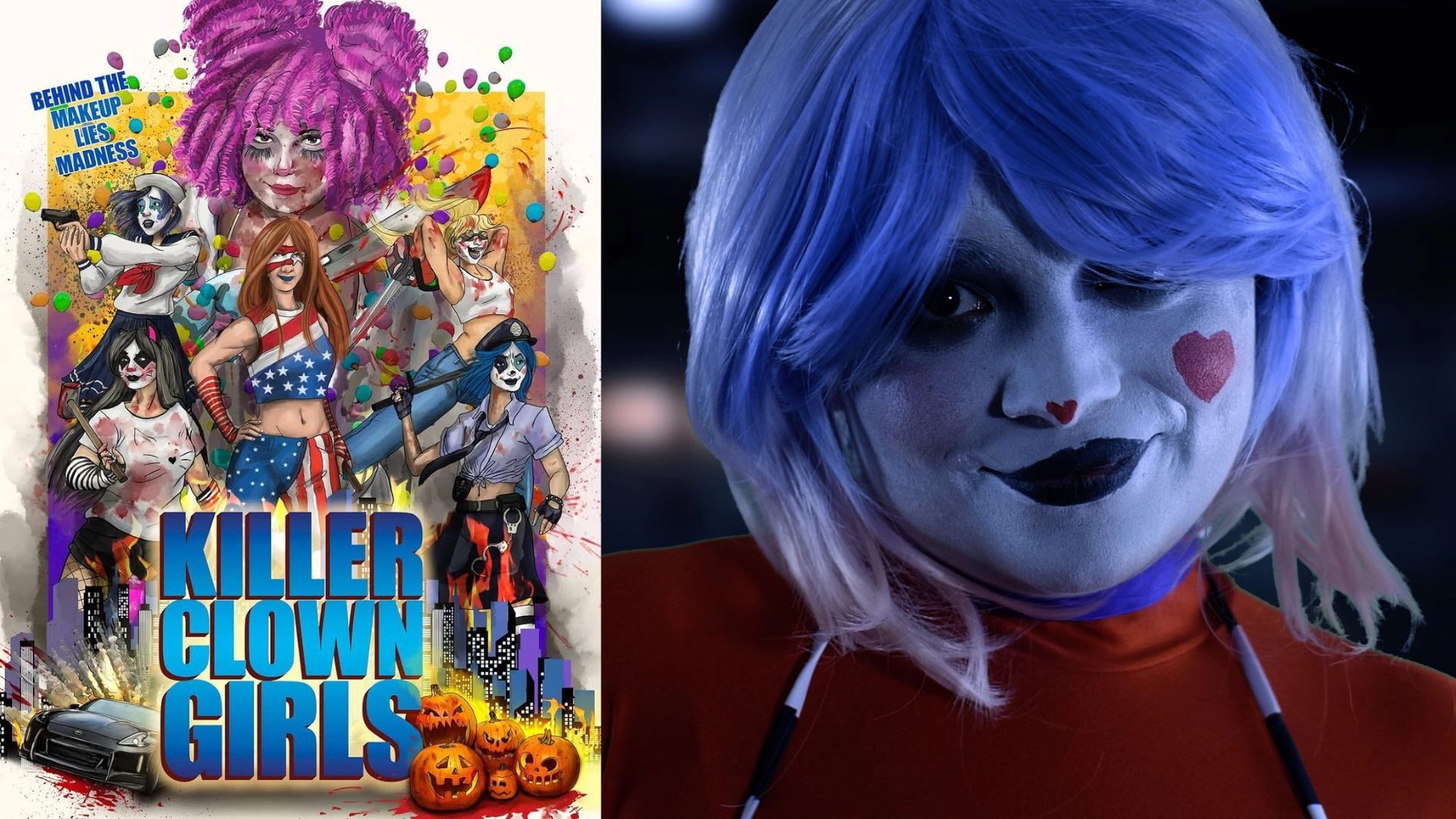
Releasing in the United States on December 30, 2025, Killer Clown Girls Movie is an uncompromising, provocative horror film that blends grindhouse aesthetics, psychological trauma, and social commentary into a bold narrative of revenge and survival. Written and directed by Roman P. Martinez, the film is not designed for casual scares—it is a confrontational genre piece that uses horror as a vehicle to explore abuse, rage, solidarity, and reclaimed power.
Starring Jason Adams, Shelley Aisner, and Theresa Allen, Killer Clown Girls stands firmly within the tradition of revenge horror, while carving out its own disturbing and symbolic identity. It is shocking, unsettling, and intentionally divisive—designed to provoke conversation rather than comfort.
Movie Details – Killer Clown Girls (2025)
| Category | Details |
| Title | Killer Clown Girls |
| Genre | Horror |
| Director | Roman P. Martinez |
| Writer | Roman P. Martinez |
| Cast | Jason Adams, Shelley Aisner, Theresa Allen |
| Release Date | December 30, 2025 (United States) |
| Country of Origin | United States |
| Language | English |
Story Overview – From Shared Trauma to Collective Vengeance
Killer Clown Girls begins in a quiet, unassuming space: a support group for women who have survived abuse and sexual assault. The meeting is raw, emotionally heavy, and deeply personal. Six women—each carrying different scars—share their experiences in a space that feels safe but fragile.
What unites them is not just trauma, but frustration.

- Frustration with systems that failed them
- Frustration with silence, dismissal, and disbelief
- Frustration with perpetrators who remain unpunished
As the night unfolds, anger slowly replaces fear. The women realize that justice, as promised by society, has never truly arrived for them.
Then comes the turning point.
They make a pact—not out of chaos, but clarity.
If the world refuses to protect them, they will protect themselves.
Their chosen disguise—clowns—becomes the film’s most unsettling and symbolic element.
View Also: The Strangers: Chapter 3 Movie – A Terrifying Finale That Redefines Survival Horror
The Clown Mask – Fear, Mockery, and Power
Clowns have long existed at the crossroads of humor and horror. In Killer Clown Girls, the clown persona represents:
- Society’s tendency to trivialize women’s pain
- The idea that abusers often hide behind charm and laughter
- Fear weaponized against those who once felt powerless
- A grotesque mirror of how trauma is often dismissed
By wearing clown makeup, the women transform themselves into something unrecognizable, both to their enemies and to their former selves. The disguise strips them of identity, allowing them to act without shame or hesitation.
The clown is not comic relief here—it is a mask of rage.
Character Dynamics – Strength in Unity
While the film avoids traditional character archetypes, each of the six women represents a different response to trauma:
- One is quiet, carrying pain internally
- One is volatile, driven by pure anger
- One is methodical, planning every move
- One is hesitant, still grappling with fear
- One is cynical, having lost faith long ago
- One becomes the emotional glue holding the group together
Their bond forms the emotional spine of the film. This is not a story of a lone vigilante—it is about collective action, solidarity, and the power of shared understanding.
The film carefully avoids glamorizing their pain. Instead, it shows how trauma reshapes people—and how unity can restore agency.
Horror as Social Commentary
Unlike traditional slasher films, Killer Clown Girls uses horror symbolically rather than randomly. Every act of violence is rooted in emotional context.
Key themes explored include:
Justice vs. Revenge
Is what they’re doing justice—or something darker? The film refuses to give easy answers.
Performance of Normalcy
Just as clowns perform happiness, abusers often perform innocence.
Psychological Aftermath of Abuse
The film portrays trauma not as a single event, but as an ongoing presence.
Failure of Institutions
Law enforcement, legal systems, and social structures appear distant, ineffective, or complicit through inaction.
Female Solidarity
The group’s strength lies in listening, believing, and standing together.
Direction – Roman P. Martinez’s Unflinching Vision
Roman P. Martinez directs Killer Clown Girls with a confrontational style. He does not soften the narrative or dilute its message for comfort.
His direction emphasizes:
- Long, uncomfortable silences
- Abrupt bursts of violence
- Minimal exposition
- Stark visual contrasts
- Emotional realism over spectacle
The pacing is deliberate. Martinez allows tension to simmer, letting the audience sit with discomfort before unleashing terror. This makes the horror feel earned, not gratuitous.
Visual Style – Gritty, Raw, and Unsettling
The film embraces a grindhouse-inspired aesthetic:
- Harsh lighting
- Grainy textures
- Neon-soaked night scenes
- Urban decay
- Handheld camerawork
Clown makeup is intentionally crude—not polished or theatrical. This grounds the horror in realism and strips away any fantasy.
Blood is used sparingly but effectively, often following moments of intense emotional confrontation.
Performances – Raw Over Polished
The performances in Killer Clown Girls prioritize emotional truth over conventional polish.
- Shelley Aisner delivers a chillingly controlled performance, embodying suppressed rage.
- Theresa Allen brings vulnerability and quiet strength, grounding the group emotionally.
- Jason Adams, in a supporting role, represents the unsettling banality of predatory behavior—never exaggerated, always disturbingly real.
The ensemble works best in group scenes, where shared silence and eye contact convey more than dialogue ever could.
Sound Design & Score – Anxiety Over Melody
The soundtrack avoids traditional horror music cues. Instead, it relies on:
- Low-frequency drones
- Sudden audio dropouts
- Distorted carnival sounds
- Echoing laughter used sparingly
Silence is a weapon here. The absence of sound often precedes violence, forcing viewers to brace themselves.
Violence With Purpose
This is not a splatter film.
Every act of violence is framed as a release of suppressed trauma, not spectacle. The camera often cuts away at crucial moments, focusing instead on:
- Faces
- Breathing
- Reactions
- Emotional aftermath
The horror comes not from gore, but from recognition.
Ethical Complexity – No Easy Comfort
Killer Clown Girls does not present its protagonists as heroes in the traditional sense. The film constantly questions:
- Does revenge heal trauma—or deepen it?
- Can violence ever be justified?
- What happens after the mask comes off?
These questions linger long after the credits roll.
Why Killer Clown Girls Stands Out
✔ A rare feminist revenge horror told from a collective perspective
✔ Symbolic use of clown imagery
✔ Emotional realism over cheap scares
✔ Will spark conversation and debate
✔ Unafraid to be uncomfortable
✔ Independent horror with a strong voice
This film will appeal to fans of:
- Revenge (2017)
- Promising Young Woman
- The Nightingale
- American Mary
- Socially conscious horror
View Also: Send Help Movie 2026 Review – Sam Raimi’s Psychological Survival Horror Thriller
Who Should Watch This Film
This film is not for everyone.
Recommended for viewers who:
- Appreciate horror with meaning
- Can handle intense subject matter
- Enjoy symbolic storytelling
- Support independent genre cinema
Not recommended for viewers seeking light entertainment or traditional slasher thrills.
Conclusion – Brutal, Necessary, and Unforgettable
Killer Clown Girls (2025) is a disturbing, thought-provoking horror film that refuses to play safe. It transforms pain into power, fear into confrontation, and silence into rage. Roman P. Martinez delivers a film that is as emotionally challenging as it is terrifying.
This is not just a horror movie—it is a statement.
⭐ Predicted Rating: 4.5 / 5
A fearless, feminist horror experience that leaves scars—and questions—long after viewing.
2 thoughts on “Killer Clown Girls Movie 2025 – A Fierce Feminist Horror About Rage, Survival & Justice”