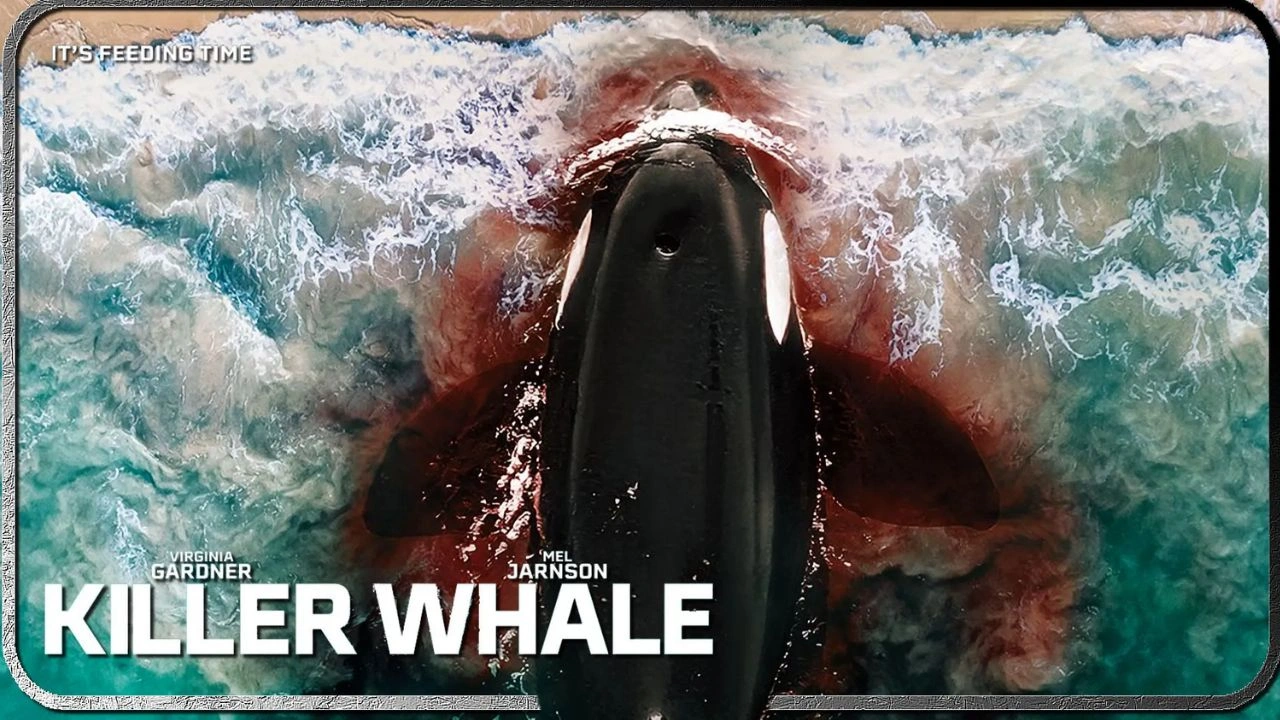
Killer Whale Movie: A haunting ocean-set thriller that turns grief into terror, nature into judge, and survival into a brutal test of will.
Killer Whale (2026) plunges audiences into a chilling, high-stakes survival story where the line between predator and victim is disturbingly blurred. Released on Friday, January 16, 2026, the film stars Mel Jarnson as Trish and Virginia Gardner as Maddie, two women bound by friendship and trauma, who find themselves trapped in a deadly confrontation with the ocean’s most intelligent and relentless hunter.
What begins as a healing escape transforms into a relentless fight for survival when a killer whale—driven not by instinct alone, but by vengeance born of cruelty and captivity—turns a remote paradise into a watery nightmare. Far from being a routine creature-feature, Killer Whale is a psychological survival thriller, combining emotional depth, environmental subtext, and nerve-shredding suspense.
Story Overview: Grief, Escape, and a Predator with a Memory
At the heart of Killer Whale lies grief. Trish, attempting to help her best friend Maddie recover from a devastating personal tragedy, plans what seems like the perfect escape: a luxurious, private lagoon halfway across the world. Surrounded by pristine waters and isolation, the trip promises peace, healing, and distance from pain.
But the ocean, as the film repeatedly reminds us, never forgets.

The women soon discover that their idyllic sanctuary is anything but safe. Beneath the calm surface lurks a killer whale—an apex predator with a past marked by brutal human captivity. Unlike typical shark or sea-monster films, this orca is not a mindless beast. It is intelligent, strategic, and terrifyingly deliberate.
As strange incidents escalate into full-blown attacks, Trish and Maddie are forced to confront a horrifying truth:
This is not a random act of nature. This is retaliation.
A Revenge Thriller Told from the Depths
What makes Killer Whale stand out is its moral ambiguity. The film dares to ask an uncomfortable question:
Who is the real monster—the animal seeking revenge, or the humans who broke it first?
The orca is portrayed not as evil, but as deeply scarred, shaped by years of exploitation and confinement. The movie never excuses the violence, but it contextualizes it, transforming the predator into a symbol of nature’s memory and rage.
This thematic choice elevates the film from simple survival horror to eco-psychological thriller, where every attack carries emotional weight.
Direction and Tone: Tension Without Excess
The director approaches Killer Whale with restraint and confidence. Instead of constant jump scares or exaggerated gore, the film relies on sustained tension, silence, and anticipation.
Directional Strengths:
- Slow-burn escalation rather than immediate chaos
- Strategic use of underwater perspective to induce fear
- Minimal exposition, trusting the audience to connect dots
- A clear emotional arc alongside the physical danger
The pacing is deliberate. The first act builds atmosphere and emotional context, the second tightens the noose, and the final act unleashes a claustrophobic survival nightmare that rarely lets the audience breathe.
Performances: Emotion Anchoring the Terror
Mel Jarnson as Trish: Strength Under Pressure
Mel Jarnson delivers a grounded and emotionally layered performance as Trish. She is not a stereotypical action heroine but a woman trying desperately to hold everything together—for her friend, and for herself.
Her portrayal is marked by:
- Quiet determination rather than bravado
- Emotional realism under escalating stress
- Convincing physical vulnerability
Trish’s transformation—from caretaker to protector—feels earned and human.
Virginia Gardner as Maddie: Grief Turned to Survival Instinct
Virginia Gardner gives one of her most compelling performances as Maddie, a character already emotionally shattered before the ocean turns hostile. Her grief is raw, unpolished, and deeply affecting.
As the film progresses, Maddie’s trauma becomes both a weakness and a strength. Her will to survive becomes an extension of her will to live again, and Gardner captures this shift with nuance.
Together, Jarnson and Gardner share strong, believable chemistry that makes their fight for survival emotionally resonant rather than purely sensational.
The Killer Whale: A Predator with Purpose
The true star of the film is the orca itself—portrayed with astonishing realism and restraint. Rather than appearing constantly, the killer whale is used sparingly, making each appearance more terrifying.
What Makes the Orca Terrifying:
- Intelligence: It studies, waits, and adapts
- Intent: Attacks are deliberate, not random
- Presence: Even unseen, it feels omnipresent
The film respects real-world science: killer whales are among the most intelligent creatures on Earth, capable of memory, strategy, and emotional response. This authenticity makes the threat feel disturbingly plausible.
You are not being hunted by an animal—you are being targeted by something that remembers.
Cinematography: Beauty That Becomes a Trap
Visually, Killer Whale is stunning. The lagoon is breathtaking at first—crystal-clear water, endless horizons, and sunlit serenity. But as danger grows, that beauty becomes oppressive.
Visual Highlights:
- Expansive underwater shots that emphasize vulnerability
- Tight close-ups during panic sequences
- Clever use of reflections and shadows beneath the surface
- A gradual shift from bright blues to darker, colder tones
The ocean is filmed as both magnificent and merciless, reinforcing the idea that humans are guests—never masters—of this world.
Sound Design & Score: Fear Beneath the Surface
Sound plays a crucial role in building tension. The film uses:
- Muffled underwater audio
- Distant, echoing whale calls
- Long stretches of near silence
The background score is minimal, allowing natural sounds—water movement, breathing, hull creaks—to dominate. When music does rise, it is subtle, enhancing dread rather than overwhelming scenes.
Often, the scariest moments arrive with no warning music at all.
Themes: More Than Survival
Beyond thrills, Killer Whale explores deeper themes:
- Grief and healing: Survival as a metaphor for emotional recovery
- Nature’s revenge: Consequences of exploiting wildlife
- Human arrogance: The illusion of control over the natural world
- Memory and trauma: How pain, once inflicted, never truly disappears
These themes give the film emotional and intellectual depth, encouraging reflection long after the credits roll.
Pacing and Structure: Taut and Relentless
The film’s structure is tightly controlled:
- Act One: Emotional setup and deceptive calm
- Act Two: Rising tension and realization of danger
- Act Three: Sustained survival horror
There is little filler. Each scene either builds character or escalates threat. The final act, in particular, is relentless, pushing both characters and viewers to their limits.
Strengths of Killer Whale
- Intelligent, emotionally grounded storytelling
- Strong lead performances
- A terrifyingly realistic predator
- Stunning cinematography
- Meaningful environmental subtext
Potential Limitations
- Slow-burn pacing may not suit all viewers
- Minimal exposition requires audience attention
- Not a traditional creature-feature with constant action
However, these choices define the film’s identity and elevate it above genre clichés.
Who Should Watch This Film?
Killer Whale is ideal for:
- Fans of survival thrillers (The Shallows, Open Water)
- Viewers who enjoy nature-based horror with depth
- Audiences interested in environmental and ethical themes
- Those seeking tension over cheap scares
It may not appeal to viewers looking for light entertainment or exaggerated monster action.
View Also: Magic Mushrooms Movie Review 2026: A Mesmerising Malayalam Mystery
Cultural and Environmental Resonance
In an era of growing awareness about animal captivity and environmental damage, Killer Whale feels timely. It taps into real-world debates about human responsibility toward wildlife, without turning into a lecture.
The film’s message is subtle but powerful:
Nature keeps score—even when we choose to forget.
Official Trailer – Killer Whale Movie
Conclusion: Is Killer Whale Worth Watching?
Yes—especially if you want a thriller that lingers.
Killer Whale (2026) is a tense, emotionally charged survival thriller that delivers both edge-of-your-seat suspense and thoughtful commentary. With strong performances, intelligent direction, and a terrifyingly believable antagonist, the film proves that sometimes the most frightening monsters are the ones shaped by human cruelty.
This is not just a fight for survival—it is a reckoning from the deep, and it will leave audiences breathless long after the final wave settles.
⭐ Overall Rating: 8.5 / 10
A gripping, intelligent thriller that respects both its audience and its subject.
1 thought on “Killer Whale Movie Review 2026: A Breathless Survival Thriller”